
The process of producing AI for academic writing is fundamental to education. Students, researchers, and professionals, need to complete essay writing, research papers, reports, and assignments throughout their careers. Thus requiring considerable time, effort, and competence in their writing abilities.
The introduction of Artificial Intelligence (AI) has revolutionized the creation of AI for academic writing. Many students and researchers are now applying artificial intelligence (AI) to assist themwith writing, editing, and researching academic texts (e.g., essays, reports, etc.). AI can speed up and improve the process of writing; however, there are also some significant ethical concerns associated with the use of AI in academic writing.

What Is AI for Academic Writing?
Using AI tools to assist in producing or improving academic writing is referred to as “AI for Academic Writing.” These tools utilize sophisticated algorithms (language models) to acquire knowledge on a subject and produce useful and relevant text about that subject.
AI can assist with the following in academic writing:
- Writing assignments & essays
- Outlining research
- Enhancing clarity & grammar
- Condensing lengthy manuscripts
- Brainstorming
These functions can be performed by tools such as ChatGPT, which are now being employed by many academic institutions to assist students with the writing process. ChatGPT acts as a response generator to prompts that provide students with an outline, thus helping them organize their writing.
Students are being encouraged to use Artificial Intelligence as a supplement rather than a replacement for human effort.
Why AI Is Becoming Popular in Academic Writing
The popularity of AI writing tools has increased due to the expanding nature of academic work and an overwhelming number of students who experience time constraints when completing their academic activities.
Here are some reasons for the increasing adoption of AI writing tools in academia:
Saves Time
In many cases, it can take hours to write a long research paper or a long essay. AI writing tools can quickly provide students with drafts.
Improves Writing Quality
In almost every situation, AI chat can help students improve their grammar and in some cases, improve their sentence structure.
Helps in Research
AI will be able to synthesize multiple text resources (study articles, for example) or generate summaries of large amounts of text.
Reduces Stress
When writing assignments, students are much less pressured when they have a resource to assist them through the assignment writing process.
Benefits of AI in Academic Writing
AI–assisted devices offer benefits to both students and collaborators on research projects.
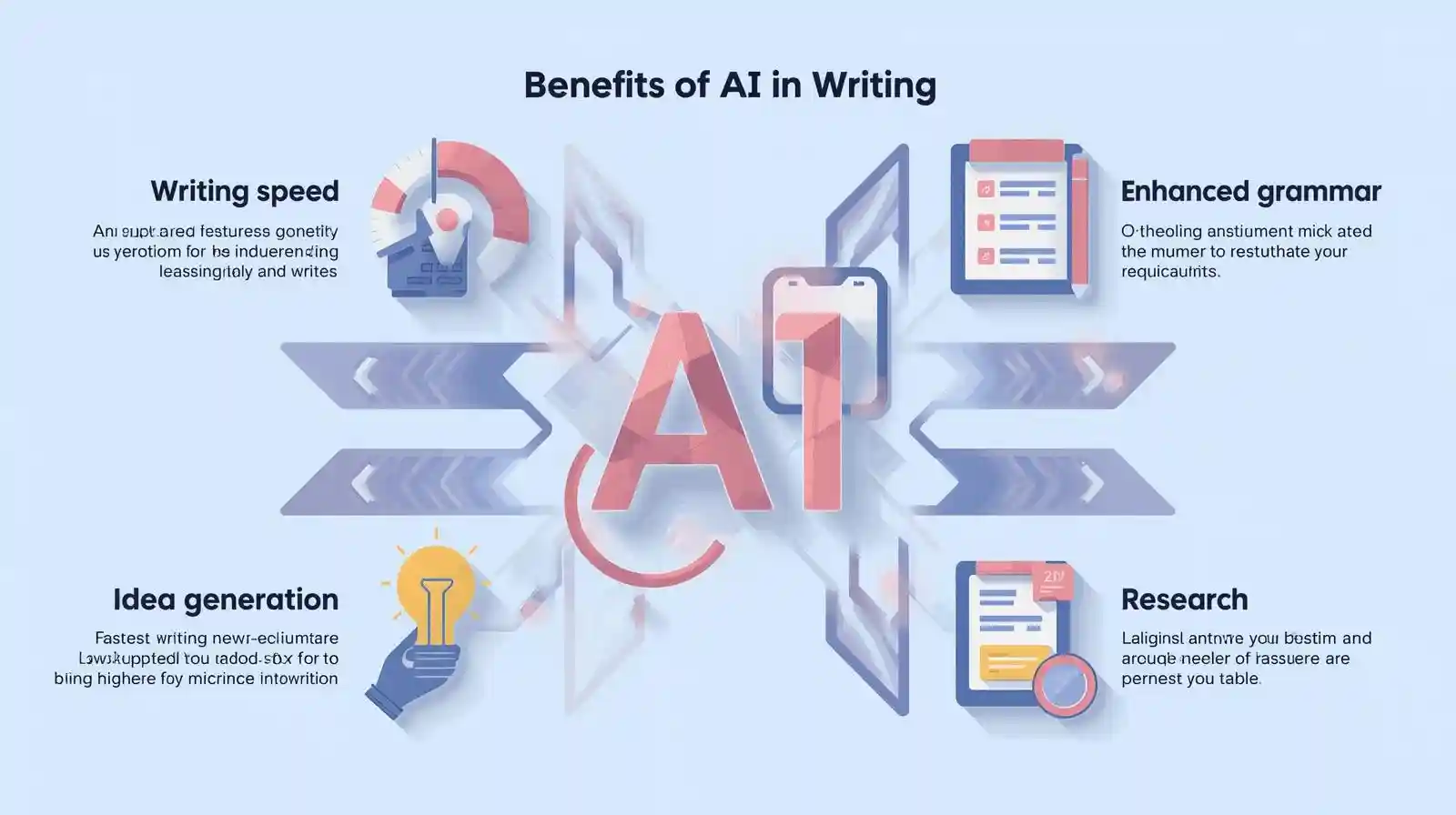
1. Faster Writing Process
AI can produce drafts and outlines in a matter of minutes.
2. Better Grammar and Clarity
AI provides a higher level of grammatical accuracy and/or legibility to text.
3. Idea Generation
AI can give students an idea about what topic needs to be covered and provide students with headings and topic suggestions.
4. Research Assistance
AI can summarize large/complex research papers down to simple bullet points.
5. Editing and Proofreading
AI can verify the spelling, grammar, formatting, and overall structure of written material.
These advantages will provide students with an easier and quicker means of completing an educational assignment.
Ethical Concerns of AI in Academic Writing
AI is a very useful tool for students, but there are serious ethical concerns that need to be addressed.
Plagiarism Risk
If a student does not take the time to EDIT that content creation produced by an AI device, the student is potentially creating duplicate or unoriginal content.
Lack of Original Thinking
Students may continue to become dependent on AI devices for developing their own ideas.
Academic Integrity
If a student submits AI-generated content creation as their own personal work, the student will violate rules and regulations of the student‘s institution.
Incorrect Information
AI–generated material can contain incorrect or outdated information.
Because of these concerns, institutions are creating rules about AI usage.
How to Use AI Ethically in Academic Writing
To utilize AI in the classroom effectively, students must adhere to specific guidelines.
Use AI for Support, Not Replacement
AI is designed to facilitate and assist you in your writing; however, it should not be utilized as a substitute for your labour.
Always Edit the Content
Any material produced by AI must be edited prior to submission.
Add Your Own Ideas
Use the information created or supplied by AI but add your own insights and analysis.
Verify the Information
Check the information you receive from AI before using that information in your work.
Follow Academic Rules
AI should only be used in accordance with the rules established by each institution.
Responsible use of AI allows students to maintain their skills, creativity and learning.
Best AI Tools for Academic Writing
Here is a short list of some of the tools available to help students with academic writing.
ChatGPT
ChatGPT is an AI tool that is widely used by students and enables them to write, generate ideas, and carry out research. It is able to generate essays, summaries, and outline documentations.
Grammarly
Grammarly offers students the ability to improve the clarity, tone, and grammar of their writing. It is also very helpful when proofreading academic material.
Turnitin
Turnitin assists students in verifying that their academic work is original.
Jasper AI
Jasper AI is designed to create structured content creation and enhance written material.
These tools help students create better content, but must be utilized with caution.
How AI Helps Students and Researchers
Artificial Intelligence (AI) has many benefits when it comes to writing for school as a student or researcher.
Before You Start Writing
You can use AI tools to generate ideas and get organized.
When You Are Writing
AI tools will aid you in creating drafts and increasing clarity where needed.
After Writing
After you write your final draft, you will benefit by using AI tools for editing your work, proofreading and checking it for plagiarism.
This entire process will make your academic writing simpler and more efficient.
Tips for Writing Better Academic Content with AI
To get the best results, follow these tips:
Keep it Simple
Make sure you use simple language, as this will make it easier for the audience to understand.
Use Proper Formatting
Use headings and paragraphs to structure the content you create.
Focus on Providing Value
The information and ideas you provide should have value.
Avoid Overdependence
You should not rely solely on AI tools for your writing tasks.
Combine AI with Human Effort
AI tools should support your thinking rather than replace your own ideas.
The Future of Academic Writing with AI
AI will continue to expand in the future. As AI continues to evolve, it will be increasingly accurate of in its ability to provide assistance to students and researchers with their academic writing tasks.
AI will provide valuable assistance, however it will never replace the human creative thought or ability. While AI can assist with writing tasks, it does not have the ability to replace critical thinking, novel thoughts and an in–depth understanding of the writing task.

Conclusion
The way we write has been revolutionized by AI for educational content creation. The technology can assist users to be more efficient, create better work, and inspire new ideas. However, while utilizing AI; we must be accountable. When using the tools, we need to be mindful of ethical considerations that include plagiarism, accuracy, and preserving the integrity of the education system. AI should enhance our education rather than substitute for it. When students use both AI and their own imagination and critical thinking skills, they will be able to develop high-quality academic papers and maintain their originality and credibility. In the long run, those who utilize AI wisely will have a significant advantage when it comes to education and career development.
