
Businesses are always seeking out new ways to increase their efficiency by minimizing the involvement of manpower in the process. Manual task management, meeting planning, and data analysis can be extremely resource-consuming.
However, this is no longer an issue due to productivity and business AI technologies that are currently making things much easier for enterprises across the globe.
Nowadays, businesses can delegate many manual tasks to AI-powered tools and software, allowing them to be completed in just minutes without affecting their quality at all.
On today’s post, we’ll be discussing the ways how productivity and business AI affect workflow automation, meeting assistants, and business data analysis.
What is Productivity and Business AI
Productivity and business AI can be defined as the utilization of artificial intelligence solutions aimed at improving businesses’ performance. Such tools make routine tasks automated, which increases the efficiency of a company’s operations significantly.
Using AI systems, companies can automate many tedious activities, such as organizing data or managing communications.
Examples of such applications include the following:
- Workflow Automation
- Emails and schedule management
- Meeting assistants
- Data analysis
- Team collaboration
It is through this that AI becomes very integral to business operations.

Why Productivity AI is Important for Businesses
Today’s businesses are faced with huge volumes of data and complicated processes. Doing all this manually may result in mistakes and delays.
AI Productivity Benefits:
Saving Time
Through the automation of mundane tasks and procedures.
Improving Accuracy
Errors during processing will be minimized.
Increasing Efficiency
Work teams will be able to achieve more in little time.
Supporting Better Decisions
Provides decision insights based on data analyses.
Reducing Costs
Costs will be saved due to automation.
These benefits make AI a powerful tool for business growth.
Workflow Automation with AI
The most important advantage of using productivity AI for businesses is the ability to automate tasks and processes independently.
What is Workflow Automation
Workflow automation refers to the process of using AI technology to conduct tasks according to set guidelines.
For example:
- Sending automated emails.
- Updating data in databases.
- Handling customer inquiries.
- Assigning tasks to workers.
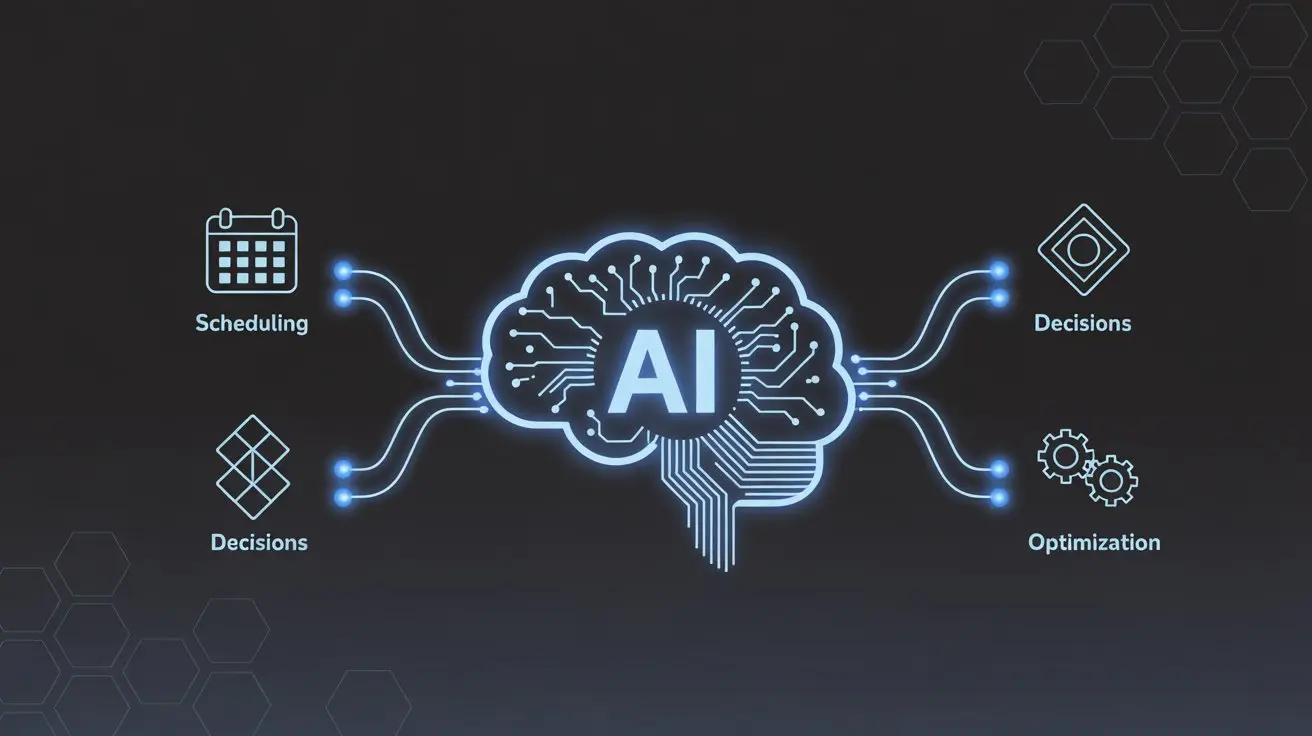
How AI Improves Workflow Automation
Artificial intelligence has made systems smart by automating processes and improving efficiency.
Automation of Tasks
Tasks like data input and task scheduling.
Smart Decision Making
Systems are enabled to make decisions upon analyzing situations.
Process Optimization
Processes are optimized and made efficient.
Integration with Other Systems
AI integrates with various business systems to ensure effective operations.
Advantages of Workflow Automation
Workflow automation offers several benefits.
Quick Operation
The process is done fast.
Mistakes Prevention
There will be minimal errors during operation.
Higher Efficiency
Employees will concentrate on other issues.
Consistent Process
Same procedures every time.
AI Meeting Assistants
Meetings are essential in business operations, but they tend to be time-consuming. AI meeting assistants help in organizing the process.
What are AI Meeting Assistants?
These are AI tools used for organizing, summarizing, and recording meetings.
They are capable of:
- Scheduling meetings.
- Recording meetings.
- Creating summaries.
- Highlighting critical information.
- Generating action plans.
How AI Improves Meetings
AI tools make meetings more productive.
Transcribe Speech to Text
Turn speech into text.
Summarize Meetings
Provide the summary.
Generate Action Plans
List down important issues discussed during meetings.
Save on Time
Kept shorter to save time.
Benefits of AI Meeting Assistants
Save Time
Automatically generate notes.
Communication Improvement
Better understanding of meetings through the summary.
Increased Efficiency
Focus on decision making.
More Organized
Access all the meeting data.
AI in Data Analysis
Data can be considered among the most significant resources for companies. Yet, the manual processing of large amounts of data is hard.
AI makes the analysis faster and more accurate.
What is AI Data Analysis
AI data analysis refers to analyzing data with machine learning algorithms to make conclusions based on that data.
With AI, a company can:
- Detect trends
- Predict the result
- Make evidence-based decisions
- Boost productivity
How AI Analyzes Data
AI analyses large amounts of data and detects any trends or other important factors.
Data Collection
Collect data from various resources.
Data Processing
Process the collected data.
Pattern Recognition
Find trends and other patterns.
Insight Generation
Generate meaningful insights.
Benefits of AI Data Analysis
Faster Insights
Get insights within seconds.
Better Decisions
Work with accurate data.
Predictions and Forecasts
Predict future trends.
Increase Efficiency
Eliminate the need for manual data analysis.
Use Cases of Productivity and Business AI
Productivity and Business AI applications are used in many fields.
Customer Support
Respond automatically to customers’ questions.
Marketing
Analyze behavior and adjust the marketing strategy.
Sales
Monitor leads.
Human Resources
Manage hiring and employee data.
Finance
Analyze financial statements.
How Businesses Can Implement AI
Implementing AI does not have to be difficult.
Step 1: Identifying Needs
Look for ways to make processes more efficient.
Step 2: Choosing Tools
Pick tools that fit your goals.
Step 3: Training the Team
Train staff on using AI tools.
Step 4: Starting Small
Start with simple tasks first.
Step 5: Monitoring Performance
Monitor results and improve processes.
Challenges of Using Business AI
Although business AI has advantages, there are some problems.
Learning Curve
Staff may need training.
Data Quality
Bad data may affect results.
Integration Issues
The tools must integrate into current systems.
Cost of Setup
Some tools may require upfront costs.
Best Practices for Using Productivity AI
To optimize productivity AI, follow these best practices.
Start with Simple Tasks
Start with easy-to-automate tasks.
Use Clean Data
Ensure data accuracy.
Monitor Results
Keep track of performance.
Combine AI with Human Skills
AI should complement human skills.
Efficiency Focus
Opt for efficient tools.
Future of Productivity and Business AI
The future for AI in business looks bright indeed.
In the years to come:
- AI will handle more intricate assignments
- Processes will become more intelligent
- Decisions will be driven by data
- Tools will be simpler to implement
AI will keep revolutionizing the world of business.
Why Businesses Should Adopt AI Now
Early adoption will put businesses ahead of their competitors.
Outmaneuver Other Companies
Leverage superior tools earlier than your competition.
Improve Efficiency
Be efficient in all your endeavors.
Increase Growth
Good processes equal good outcomes.
Enhance Customer Experience
Serve customers faster and better.

Conclusion
Productivity and business AI is revolutionizing the business environment. Through automation, management, analysis, and communication, AI-powered tools are streamlining operations, increasing efficiency, and enhancing productivity.
They eliminate the need for repetitive processes, promote consistency and accuracy, and provide valuable insights. Companies embracing AI technology can benefit from savings in time and cost and increased productivity.
AI should only serve as an auxiliary tool and not as a substitute for human intelligence. The ideal outcome is when both human and artificial intelligence collaborate and complement each other.
With the constant changes in technological advancements, productivity and business AI are going to be indispensable in any successful business venture. Embracing productivity and business AI now will put you at a competitive advantage in the digital realm.
