
Businesses are increasingly focusing on automation tools to improve efficiency as the world becomes more digital.
Many startups and businesses are interested in implementing Artificial Intelligence in their operations. However, many still believe that technical or coding knowledge is required to use AI.
Good news: that’s no longer true.
With modern technologies available today, you don’t need to write a single line of code to build your own AI agent. This is how AI productivity and Business AI are becoming accessible to everyone.
Anyone can build an intelligent system using No Code AI, regardless of their industry. With AI cold email outreach, businesses can automate communication and improve engagement. AI cold email outreach also helps companies scale faster, while AI cold email outreach tools make it easier to manage campaigns efficiently.
In this blog, you’ll learn step-by-step how to create your own AI agent using no-code tools and apply AI cold email outreach to grow your business.
What is a No-Code AI Agent
An agent that doesn‘t have to be coded can use artificial intelligence (AI) to automate functions or perform tasks on their own without the need of programming knowledge.
No–code AI agents can do the following things:
- Respond to customer inquiries
- Automate workflows
- Manage workflow processes
- Provide support during decision-making
- Assist with mechanical, repetitive tasks
No–code AI agents can be created by using sophisticated technology that is available to you; it doesn‘t take a degree in computer science to build one. You simply utilize tools already in place to implement your agent.
Why Build an AI Agent Without Coding
Many benefits are associated with building AI agents in a non–programming environment.
Simple to Use
Requires no technical expertise.
Saves You Time
To quickly set up your automated processes.
Low–Cost
You will not need anyone else to write your programs.
Adaptive
You can change them as needed to fit your business needs.
Scalable
Will grow with your company.
The Way No-Code AI Agents Function
No-Code AI agents are designed to function using very basic logic combined with AI models.
Input
User provides some type of command or question.
Processing
AI looks at the input received.
Output
AI returns a result or acts on the input provided.
There are several types of pre–existing platforms that are typically used, including:
- Pre-Trained AI Models
- Workflows for Automating Business Processes
- Drag-and-Drop Builder Interfaces
Best No-Code Tools to Build AI Agents
Below is a list of some of the most popular no-code tools available for creating AI agents with little to no coding experience, as well as links to those tools’ websites.
Zapier
Below is a list of some of the most popular no-code tools available for creating AI agents with little to no coding experience, as well as links to those tools’ websites.
Notion AI
Notion AI can help you keep track of your data and organize it in a way that allows you to automate some of your tasks.
Make (Integromat)
Make is typically used to automate more complex workflows than what is possible with Zapier.
Bubble
With Bubble, you can build responsive websites and web applications that have integrated AI functionality using just a web browser.
Airtable
You can use Airtable as a database, table, or file for storing structured data related to your AI systems.
Step–by–Step To Creating a No-Code AI Agent
Follow these steps to create your AI agent.
Step 1 Identify Your Objectives
Determine the purpose of your AI agent (such as customer service/support, lead generation, or automating tasks).
Step 2 Select No-Code Platform
Choose the best platform to meet your specific requirements from the available options.
Step 3 Design Agent Workflow
Create a series of steps outlining how the AI will respond to different inputs received.
Step 4 Implement AI Features
To assist with comprehension, add AI features that can assist with automation and/or logical decision–making.
Step 5 Test AI Agent
Ensure the AI will respond appropriately after performing any type of testing on it or the functions associated with it.
Step 6 Launch AI Agent
Start using the AI agent(s) within your company.
Use Cases of No-Code AI Agents
No–Code AI agents have a variety of use cases.
Customer Support
Automatically provide responses to common questions from your customers.
Lead Generation
Automatically collect leads and manage them.
Task Automation
Use the AI agent to complete common day–to–day activities within your business.
Content Creation
Use the AI agent to create articles, web pages, social media posts, etc.
Data Management
Utilize automated software applications, built using the no–code method, as a means of storing and organizing large amounts of data.
Advancements in No-Code AI Agents
No-code AI agents can be helpful to anyone.
Increase Your Productivity
Eliminate repetitive tasks.
Faster Workflows
Complete projects much faster.
Better Efficiency
Do less manual labor.
Easy Integration
Connect with tools that you already use.
Improved Customer Experience
Offer fast responses to customer inquiries.
Tips for Building Effective AI Agents
Follow our tips to help you achieve your goals.
Keep It Simple
Start off with basic capabilities.
Define Clear Rules
Establish explicit guidelines for the agent to follow.
Test Regularly
Show that the agent works properly.
Update Continuously
Refine the system to improve it based on feedback.
Combine Tools
Utilize several applications for enhanced capabilities.
Common Mistakes to Avoid
Avoid these common mistakes.
Over Complicating Workflows
Maintain a simple process workflow.
Ignoring User Needs
Concentrate on addressing your users‘ real–life issues.
Not Testing Properly
Always test before putting the agent into production.
Lack of Updates
Keep improving your system.
Role of AI Agents in Productivity and Business AI
AI agents are considered an integral component of productivity and business–related AI.
Businesses benefit from the following:
- Automate Workflows
- Increase Efficiency
- Minimize Manual Labor
- Improve Interaction with Customers
As a result, AI Agents have become an important tool for all types of modern enterprises.
Future of No-Code AI Agents
Looking ahead, no–code AI Agents appear to have a bright future. Over the next few years, we can expect:
Over the next few years, we can expect:
- Smarter AI Agents
- Increased Performance/Functionality of No-Code Tools
- Increased Automation
- Further Dependence on AI by the Organization
Thus, AI Agents will play significant roles in the ongoing process of Digital Transformation.
Best Practices for Using No-Code AI Agents
The following are examples of best practices to follow:
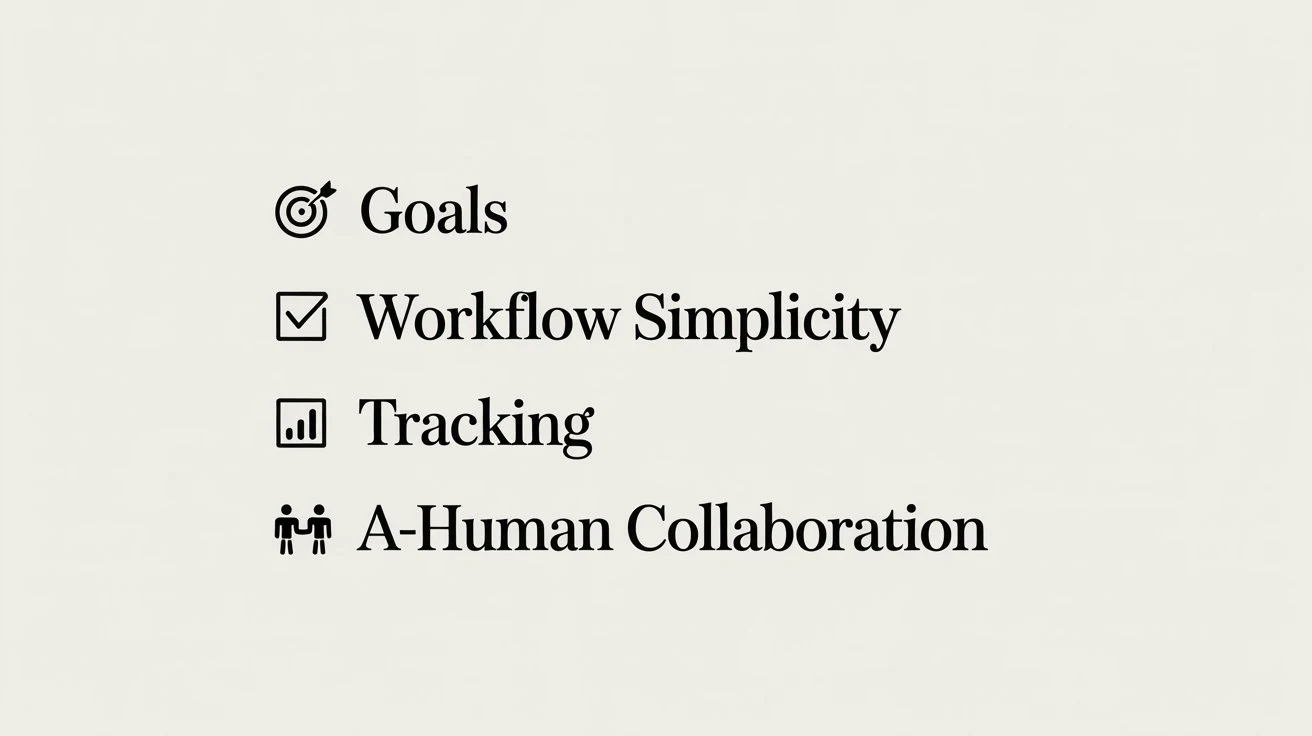
- Define your goals before implementation;
- Choose reputable supplier/vendor of no–code software;
- Establish a method to track the success rate of your efforts;
- Simplify workflow as much as possible;
- Use an AI/Non–AI combination in performing tasks.
Conclusion
The availability of no-code tools allows everyone to build their own AI agent easily. For example, you can develop complex automated systems without having any technical background or experience.
No-Code AI Agents help businesses increase productivity, decrease time spent on repetitive tasks, and automate processes effectively. You’ll be able to spend your valuable time focusing on other tasks to help you grow your business rather than spending it working on menial tasks handled by an artificial intelligence–based agent.
Using the proper tools and following simple steps, anyone can create an AI agent for their business. With continued advancements in AI technology and as no-code solutions evolve, AI–based solutions will continue to become even more powerful.
